Back to portfolio
Project dossierSIGNAL-ATLAS.CASE
Prototype2025Featured

ER Triage & Queue Manager

A workflow prototype for emergency-room queue visibility, patient-state tracking, and triage prioritization.

A workflow prototype for emergency-room queue visibility, patient-state tracking, and triage prioritization using structured forms, local data persistence, and dashboard views.

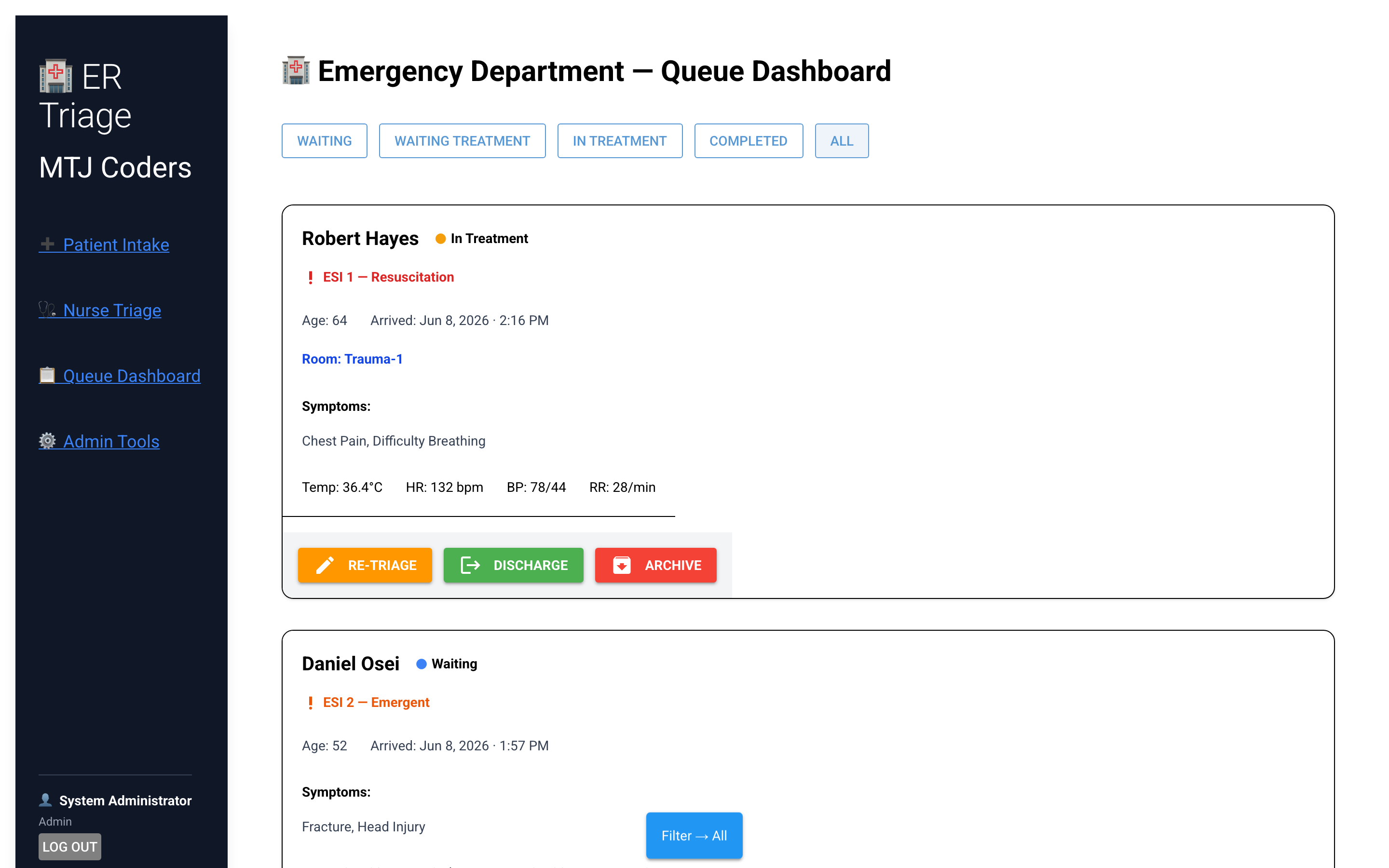
ER Triage primary proof visual

Problem

What this project solves

Emergency room workflows depend on clear shared visibility. Intake, vitals, priority, room assignment, and treatment progression can become fragmented if they are not represented in one system.

Solution

How I approached it

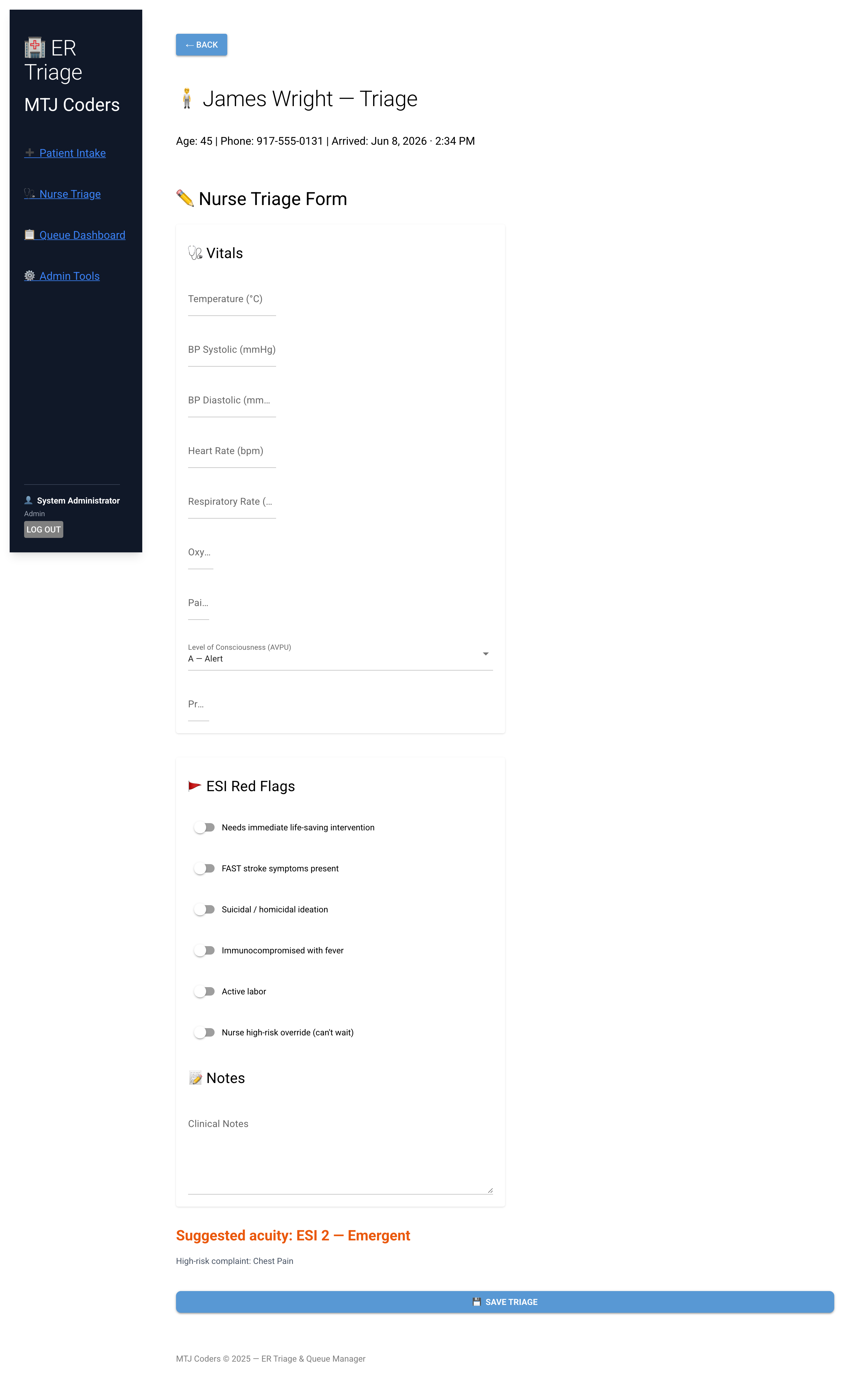
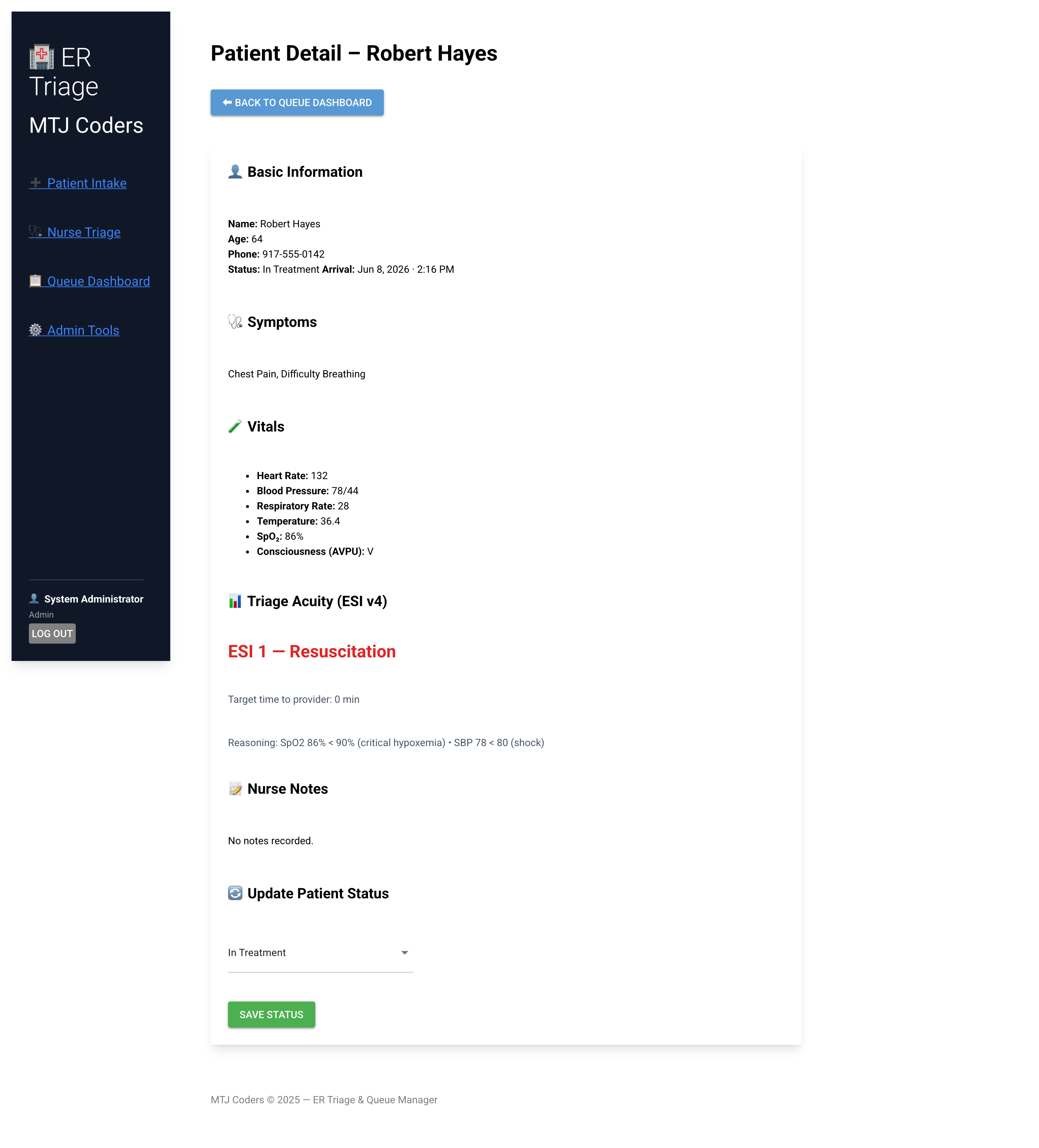
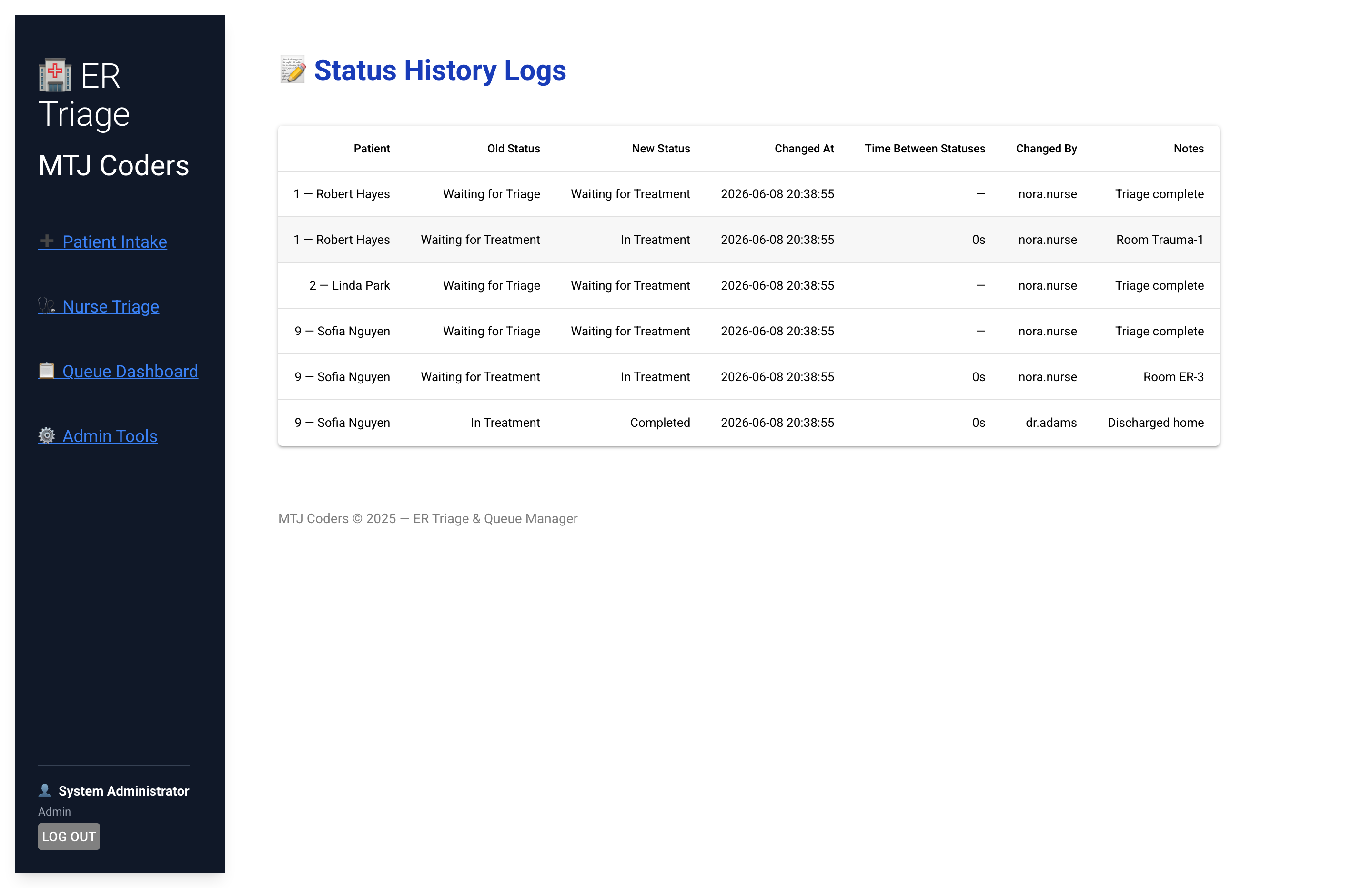
The prototype centralizes patient intake, vitals entry, priority scoring, queue monitoring, patient insight pages, and status history.

Architecture

System structure

01

NiceGUI UI organizes the app around intake, nurse triage, queue monitoring, and admin views.

02

SQLite persists patient records, vitals, priority, room assignment, and status history.

03

Priority logic connects symptoms and vitals to a queue position.

04

Dashboard views present patient state in a way that can be used during a live demo.

Decisions

Tradeoffs and outcomes

01

Workflow model before interface

Tradeoff: A hospital queue screen can look useful even if it does not reflect patient states, priority changes, or staff handoff.

Outcome: Modeled queue visibility, triage priority, patient status, and dashboard state before treating the UI as the final artifact.

02

Local persistence for prototype speed

Tradeoff: A cloud backend would be more realistic, but it would slow early iteration for a workflow prototype.

Outcome: Used local data persistence so the prototype could demonstrate patient state changes, queue behavior, and dashboard updates quickly.

03

Explainable priority over black-box scoring

Tradeoff: Automated priority scoring can become unsafe or untrusted if users cannot understand why a patient moved in the queue.

Outcome: Kept triage logic structured so future versions can show the reason behind priority changes and attention flags.

Proof

Evidence and impact

01

This project shows workflow modeling, interface structure, data persistence, and the ability to convert a real operational problem into a functioning software prototype.

02

Python application structure

03

SQLite database model

04

Patient state and status history

05

Queue dashboard and role-based workflow screens

Roadmap

Next iteration

01

Add screen captures of each core workflow.

02

Document the scoring algorithm clearly.

03

Create a short demo video for the case study.